
Ollantaytambo
Ollantaytambo, often referred to simply as “Ollanta” by the locals, is a fascinating historic town nestled in the Sacred Valley of the Incas in Peru.
Ollantaytambo, often referred to simply as “Ollanta” by the locals, is a fascinating historic town nestled in the Sacred Valley of the Incas in Peru.
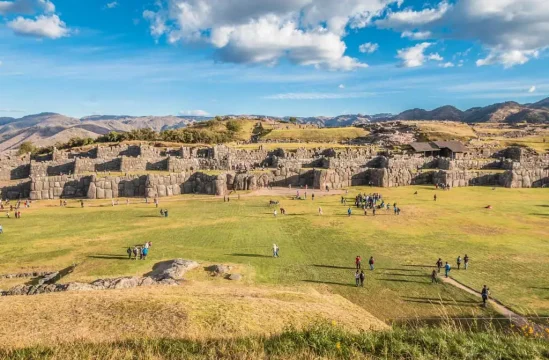
One of the most famous attractions around Cusco, Sacsayhuaman (also spelled out as Saksaywaman or Saqsawaman) is the native word for “Royal Eagle.” Located at the northern edge of Cusco, these ruins used to be a massive fortress, showcasing the Incan architects’ skills in harmoniously blending monumental structures with the natural landscape.
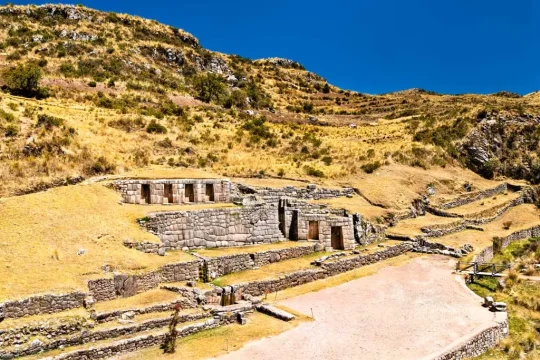
According to chroniclers, the name Tambomachay combines two Quechua words: Tampu (collective accommodation) and Mach’ay (resting place or caverns). These stone structures were naturally formed by the waterways coming from nearby wells and thermal springs.
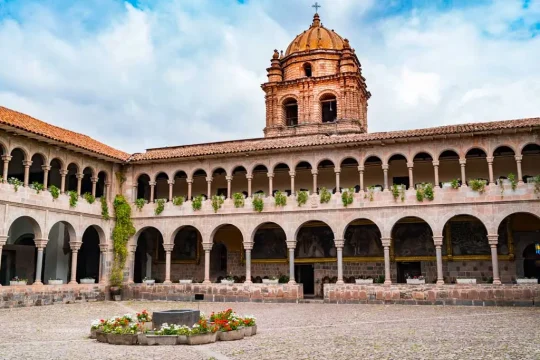
Translated as “Golden Courtyard” from the Quechua language, Qorikancha was literally covered in gold during Inca times. Within its enclosure was the Temple of the Sun.
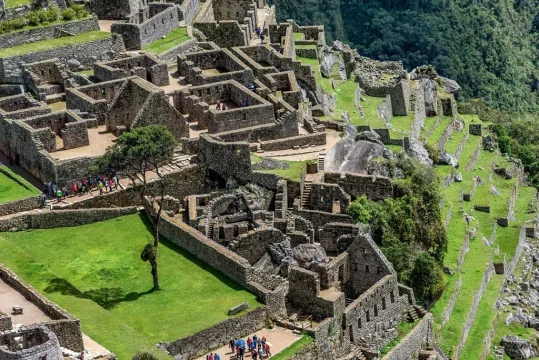
The Peruvian Andean Mountain Range offers adventurers, trekkers, and tourists many wonders.
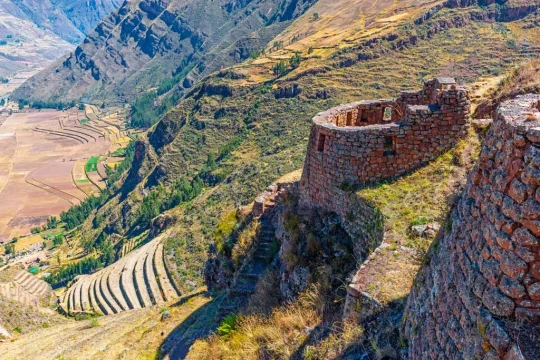
As was customary in Inca architecture, cities were built in the shape of animals. Pisac is shaped like a partridge and named after the bird.

Maras is home to the Moray Archaeological Complex, where circular agricultural terraces, or “muyus” were excavated from the earth to create different microclimates, as part of what is said to have been an Inca agricultural research station.

The journey is quite steep up to 13,615 feet but well worth it. The site is located on a plateau with stunning views of the Sacred Valley and the snow capped peaks of the Vilcabamba Mountain Range.